Where hard coatings manage heat and abrasion, DLC manages surface interaction — sliding, sticking, and adhesive wear. Success depends less on a coating name and more on:

  • Plasma generation and bias control
  • Surface preparation before deposition
  • Fixture geometry and line-of-sight
  • Batch-to-batch repeatability

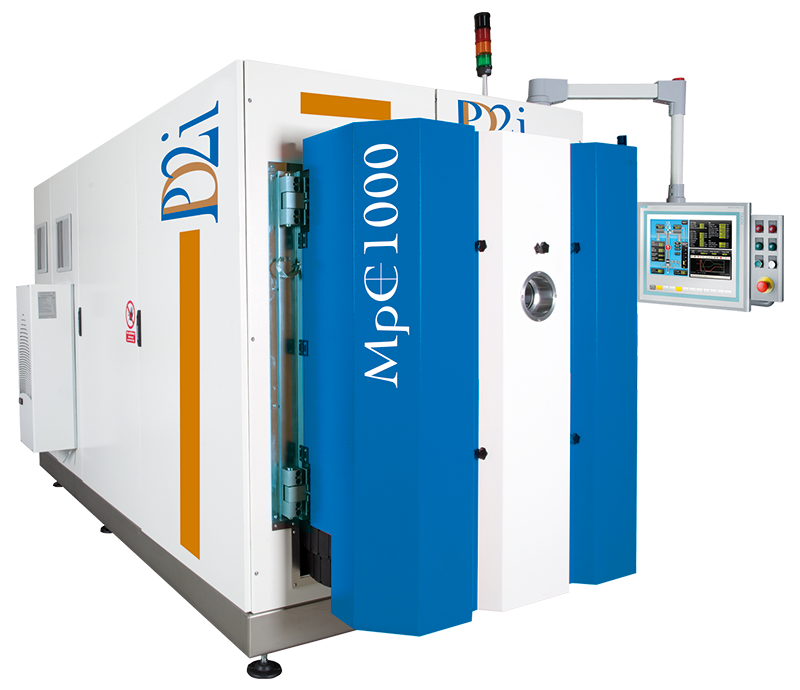
Component programs are rarely about maximum hardness. They are about how two surfaces behave together over millions of cycles. MpC DLC systems are used when customers need:

  • Predictable friction behavior
  • Resistance to adhesive wear
  • Smoother running mechanisms
  • Corrosion + wear combined performance

PLATFORM BENEFITS:

  • Adjustable, recipe-driven processes
  • Low running costs and scalable technologies
  • Full technology and service support
  • Open process editor for development
  • Useful volume Ø 500 × H 500 mm
  • Load size of 200 kg
  • Number of magnetrons: 2

Best for: focused part families, controlled validation programs and building a first DLC coating cell.

  • Useful volume Ø 640 × H 650 mm
  • Load size of 500 kg
  • Number of magnetrons: 4
  • Option: HiPIMS

Best for: dedicated  tribology center, stable weekly schedules and validated acceptance workflows.

  • Useful volume Ø 800 × H 650 mm
  • Load size of 600 kg
  • Number of magnetrons: 4 or 5
  • Option: Arc & Sputtering

Best for: dedicated  tribology center, stable weekly schedules and validated acceptance workflows.

  • Useful volume Ø 800 × H 1000 mm
  • Load size of 800 kg
  • Number of magnetrons: 4 or 5
  • Option: Arc & Sputtering